A house is like a plant with roots. If the roots don’t go deep and strong, the plant may bend or fall in the wind. In the same way, a building needs strong foundations to stay stable and safe. One common type of foundation used in many house builds is the strip foundation. This type of foundation plays a big role in how stable a building will be.
A building stands strong only when the ground beneath it works in its favor. Strip foundations play a quiet but powerful role in this balance. They carry the weight of walls, share the load with the soil below, and help homes stay level over time.
What Is a Strip Foundation?
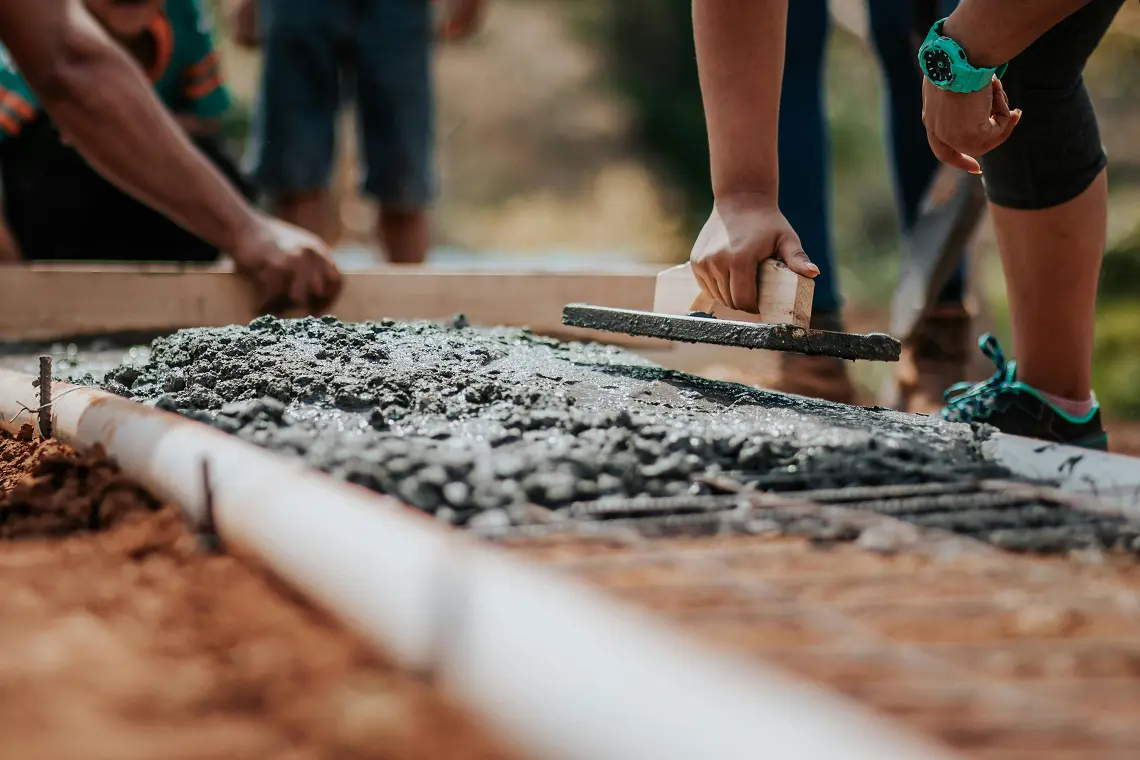
A strip foundation is a continuous line of concrete placed under load-bearing walls that spreads the weight of a building along the ground. Builders also call it a strip footing or wall footing because it runs along the length of a wall instead of holding weight at single points.
If you imagine a row of dominoes, a strip foundation is like placing a wide board under them so they don’t fall over easily. The board spreads the weight and keeps everything stable.
This foundation type is common for smaller buildings and houses where the ground under the walls is firm and able to support the loads.
How Strip Foundations Help Building Stability
A good foundation design spreads the weight evenly so one area does not carry too much load. In a strip foundation, the concrete runs along the wall and transfers the load deep into the soil beneath. This prevents the building from tilting or sinking unevenly.
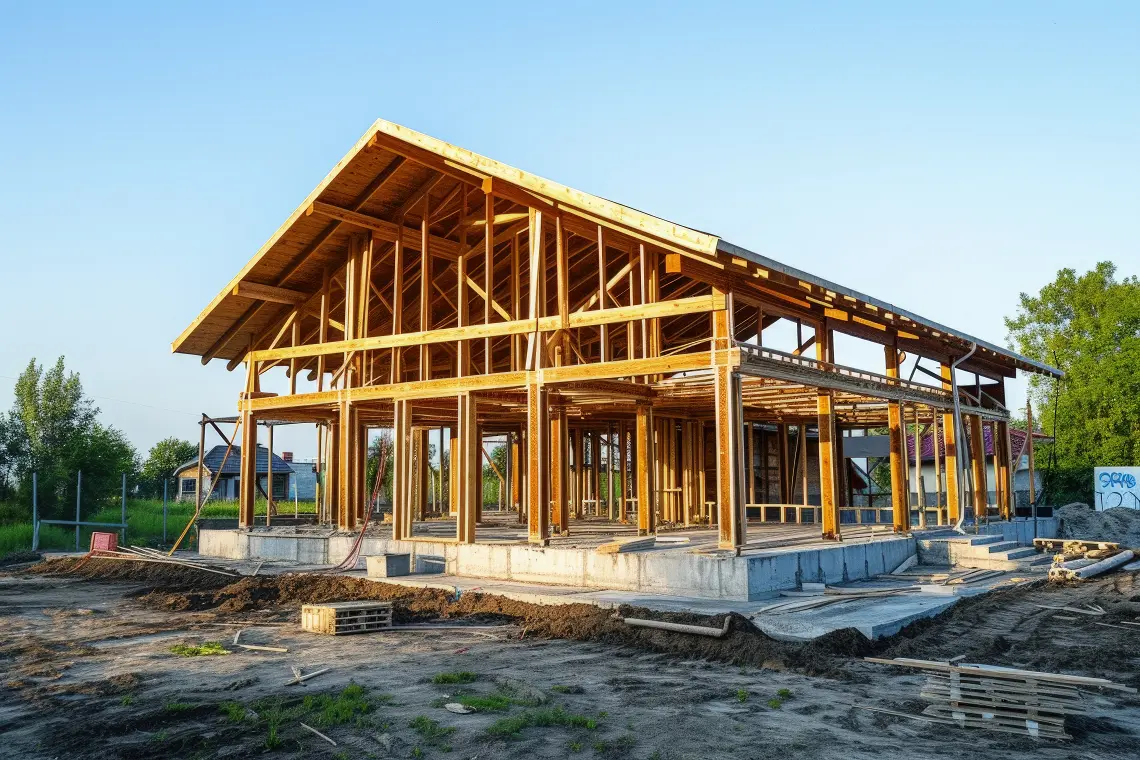
Carefully designed strip foundations work like a bridge that carries weight smoothly instead of leaving it all in one place. When the load is even, the soil below does not settle in patches, so cracks in walls and floors are less likely to form over time.
Also, strip foundations are good at resisting slight movements of soil, such as minor shifts after rain or slight changes in temperature. They give a steady base on which walls can stay straight and strong.
Soil Conditions and Why They Matter
Soil type plays a huge part in how strip foundations perform. Some soil is like a hard cookie dough, firm and easy to build on. Wet clay soil can shrink or swell, like soft dough that changes shape when water touches it.
If strip foundations are placed on soil that is weak or changing, the building above may settle unevenly. Imagine standing on soft sand versus solid ground. On soft sand, your feet sink more on one side, and it’s harder to balance. Buildings behave the same way if the soil under the strip foundation cannot take the weight; parts of the building may sink faster than others.
That is why engineers check the soil before design. Weak soil often needs wider or deeper strip foundations, or builders choose a different foundation type like piles or raft foundations.
Spread of Load With Strip Foundation
Strip foundations are most suited for buildings with straight rows of load-bearing walls, which are walls that carry the weight of the roof and upper floors. In weak soil, builders make strip foundations wider or deeper, or they switch to piles or raft foundations.
This even spread creates a stable base. It is similar to placing weight evenly on a plank supported at many points instead of just one end. If weight gathers in one spot, the plank might bend or break. But if it is shared along the length, it holds better.
This is why strip foundations are common in residential builds; the loads are usually well-spaced and not very heavy.
Depth and Width of Strip Foundation
The size and depth of a strip foundation affect how well it performs. The foundation must be deep enough to avoid frost action, which can make soil move when it freezes, and deep enough to sit on firm ground rather than loose topsoil or roots.
As a rule of thumb, the foundation should be at least as deep as the wall is wide. In many cases, strip foundations go about 450–750 mm deep to protect against frost and reach solid soil layers.
If the foundation is too shallow, the ground may shift with spells of wet and dry weather, causing uneven settlement and strain on walls. If it is deep and wide enough, it acts like a strong beam that smooths out the weight and keeps the structure level.
Reinforcement and Concrete Quality
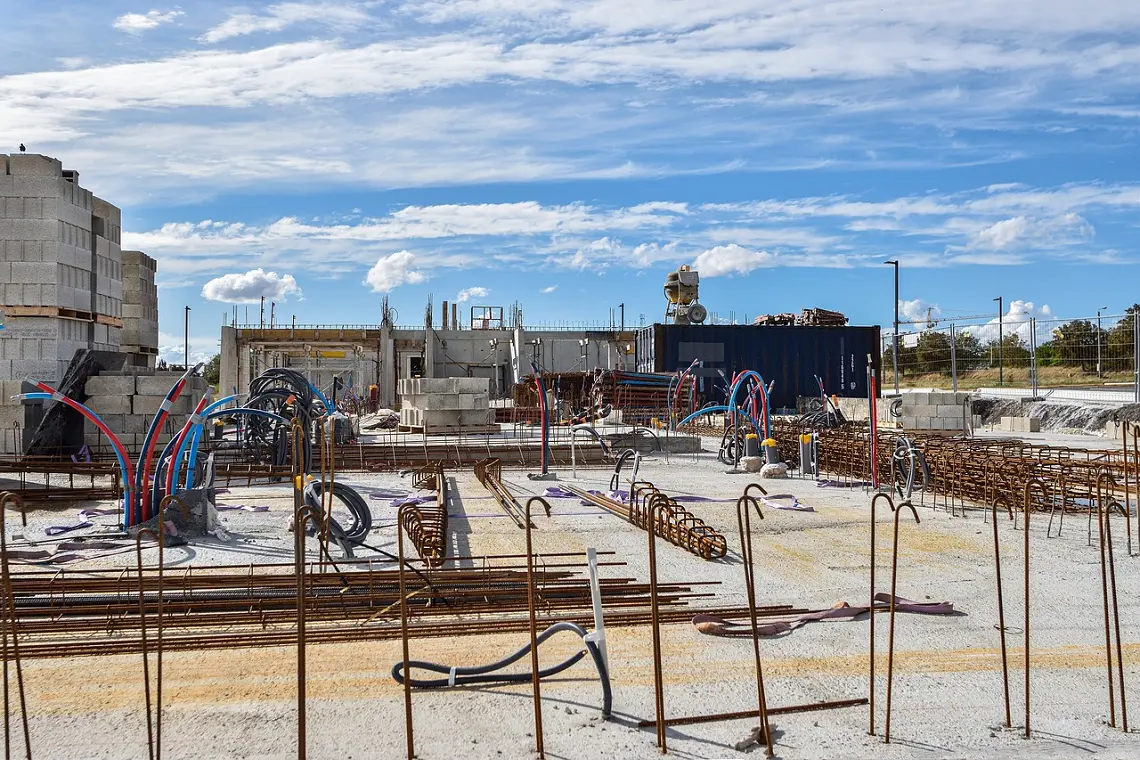
Plain concrete suits small, lightweight buildings, but reinforced strip foundations provide greater strength and reduce the risk of cracking. Steel bars embedded in the concrete help the strip foundation bend slightly without breaking when the soil moves ever so little.
Good quality concrete also matters. Weak concrete can crumble or crack, which weakens the spread of the load. Builders choose the right mix of materials for strip foundations to ensure they last as long as the house.
When Strip Foundations Might Not Be Suitable
Strip foundations suit firm soil and evenly spread loads, making them ideal for houses and small residential buildings. However, they are not best for every situation.
Very soft or wet soil, or a high water table, can cause strip foundations to struggle with movement control. In such cases, deeper foundations like pile foundations or raft foundations might be needed. Strong winds or sloping land may also require different foundation types to keep the building steady.
In these conditions, a strip foundation may settle unevenly or fail to spread the load adequately.
Comparing Strip Foundations With Other Types
Strip foundations are one of many foundation types. Their main rival is the raft foundation, where a large slab supports the whole building, often in locations with weak soil. Raft foundations spread the load over a larger area, and builders use them when strip foundations might fail.
Pile foundations go deep into the ground to reach firm soil layers and are used when soil near the surface is too weak or where buildings are very tall. Strip foundations are simpler and cheaper but best suited for smaller and lighter structures.

Each foundation type has its own job, just like tools in a toolbox; the right one must be chosen for the soil and building type.
What happens if the strip foundation design is Poor
If strip foundations are not designed well, buildings may show signs of stress. Walls may crack, floors may sink, and doors may begin to stick. These signs are like warning lights on a car dashboard; they show that something beneath the surface needs fixing.
In the worst cases, poor design can lead to serious structural problems, such as sloping floors or uneven walls. These problems often start quietly and grow over time, so correcting the foundation design from the start is much easier than repairing a damaged home later.
How Strip Foundation Design Helps Homes Last
Good strip foundation design helps a building stand still over time, like putting a house on a firm, wide base that stays level even when soil changes around it. When the load spreads evenly, the home handles rain, frost, and the weight above it without extra strain.
This steady base also protects the walls, floors, and roof by preventing shifting foundations from pulling or pushing them.
FAQs
1. What is a strip foundation?
A strip foundation is a continuous concrete footing that supports walls and spreads weight over the soil beneath.
2. Why do strip foundations help build stability?
They spread the building’s load along the ground, reducing uneven settling that can cause cracks.
3. Can strip foundations be used on any soil?
No. They work best on firm, stable soil. Weak or shifting soil may need deeper or different foundations.
4. Do strip foundations need steel reinforcement?
Reinforcement helps the foundation resist cracking and minor soil movement. It’s often used in heavier or critical builds.
5. What happens if a strip foundation is too shallow?
If it is too shallow, soil changes from frost or moisture may cause uneven settling and stress on the building, leading to cracks.
Final Thoughts
Strip foundations are like long, steady bridges between a building and the ground. When designed well with good depth, proper width, stable soil, and quality materials, they support walls and weight evenly, helping a structure stay strong and stable over many years.
If soil conditions or loads are complicated, engineers adjust the design or choose another foundation type. The goal is always the same: to make buildings safe, steady, and long-lasting.